Entry · Ref QXBAPZ8D
Why Your SEO Analysis Tool Choice Defines Your Strategy
- Posted
- 2026-10-26
- Last amended
- 2026-10-26
- Account
- @myseoanalysistoolpress
I have been doing SEO long enough to remember when a single rank checker and a gut feeling were enough to get by. Those days are gone. The modern search results page is shaped by core web vitals, structured data, and a Google algorithm that updates faster than most of us can read the release notes. If you are still guessing what to optimize, you are losing ground. The difference between a winning strategy and a frustrating cycle of trial and error often comes down to the seo analysis tool you trust to guide your decisions.
Over the years I have tested most of the major platforms, switched stacks a few times, and watched clients waste money on tools that looked good in demos but delivered shallow data when it mattered. This article is not a review roundup. It is a practical look at what separates a useful seo analysis tool from a distraction, and how to pick the right one for the work you actually do.
Start with the question, not the dashboard
Before you open any trial, ask yourself what you are trying to learn. If you need to understand why a page dropped from position three to position nine, you need something that connects ranking changes to specific on-page factors. If you are auditing a site for the first time, you need crawl data, page speed metrics, and backlink analysis in one view. The best seo analysis tool for your situation is the one that answers your actual question without forcing you to stitch together reports from three different logins.
When breadth beats depth
For general site audits and competitor analysis, I lean toward platforms that aggregate a lot of signals in one place. Semrush and Ahrefs both do this well. They give you keyword research, backlink profiles, and content gap analysis in the same interface. If you are managing multiple clients or domains, these tools save hours of manual cross-referencing. Moz offers a similar breadth, though its index size sometimes lags behind the larger players. The trade-off is that broad tools sometimes sacrifice nuance. A rank tracker that updates weekly might miss a daily fluctuation that matters for a high-competition query. You need to know your tolerance for latency.
When depth matters more
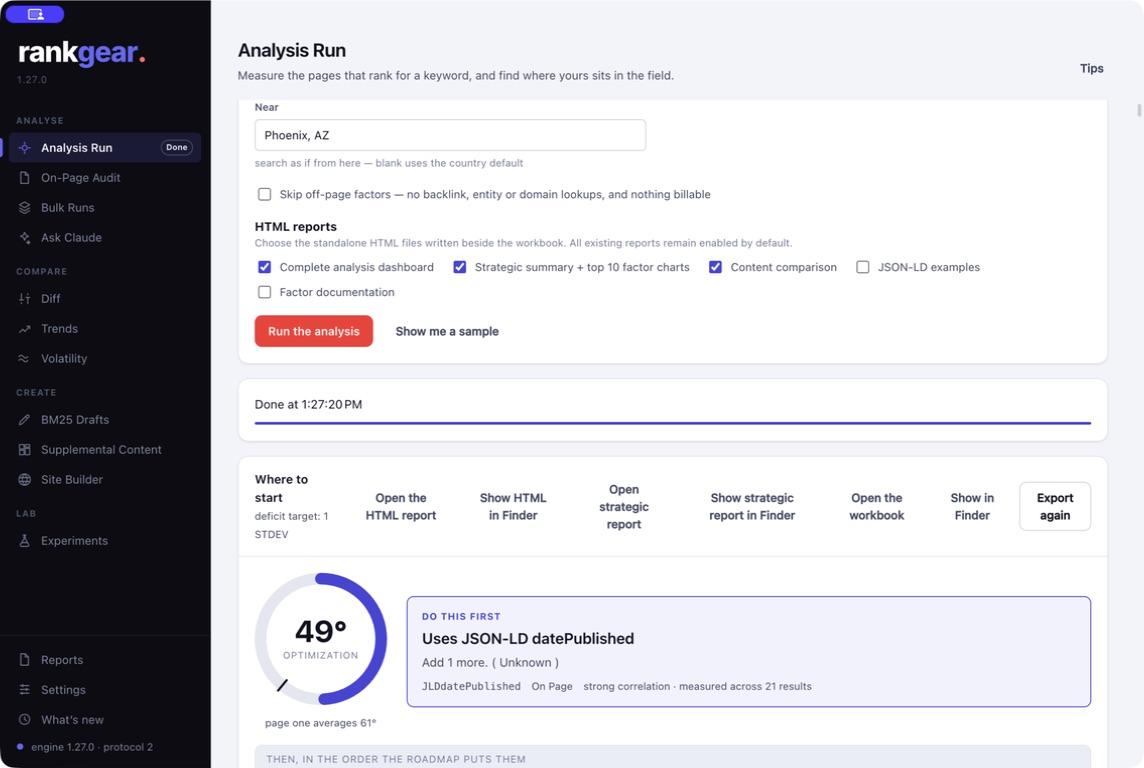
Sometimes you need to zoom in on a single page or a single technical issue. That is where specialized tools earn their keep. Screaming Frog is still my go-to for crawling a site and finding broken links, missing meta descriptions, and redirect chains. PageSpeed Insights and the Core Web Vitals reports in Google Search Console give you the raw performance data that aggregated tools often simplify into a letter grade. I have seen teams chase a green Lighthouse score while ignoring that their Largest Contentful Paint was still above three seconds. The raw numbers tell a more honest story.
Blending data sources without drowning
No single tool covers everything. That is not a flaw of the tools; it is the nature of SEO. Technical SEO requires crawl logs and server response codes. On-page SEO needs content analysis and keyword placement. Off-page work demands backlink analysis and brand mention tracking. The trick is to build a small stack of complementary tools and learn how to reconcile their data.
I usually start with Google Search Console and Google Analytics for baseline performance: which queries bring traffic, which pages have the best click-through rates, where users drop off. Then I layer in a paid tool like Ahrefs or Semrush for competitor analysis and keyword research. For technical audits, I run Screaming Frog and cross-check its findings against the Core Web Vitals data from PageSpeed Insights. When I need to understand why a specific page is underperforming, I look at the structured data markup, the internal linking structure, and the content itself. That kind of cross-referencing only works if you trust the accuracy of each source.
A practical example
Last year I worked with a site that had strong domain authority but kept losing rankings for its money pages. The backlink profile looked healthy in Ahrefs, and the on-page content was well-optimized. The problem turned out to be a subtle technical issue: a server-side redirect chain that added two seconds of latency on mobile. No single tool flagged it as a critical failure, but when I combined the crawl data from Screaming Frog with the Core Web Vitals reports in Google Search Console, the pattern was obvious. The fix took an afternoon. The rankings recovered within two weeks.
That experience reinforced something I had heard from Rand Fishkin and Brian Dean years ago: SEO is not about finding one magic metric. It is about connecting dots across different data sets. A good tool makes that connection easier. A great tool helps you see the connection before you even know to look for it.
What to watch for in the tool itself
Feature lists are easy to copy. Real utility comes from execution. Here are the qualities I have learned to value after years of switching between platforms:
- Data freshness - A backlink index that is three months old is worse than useless. It leads to bad decisions. Check how often the tool updates its index and whether it covers the types of sites relevant to your market.
- Actionable suggestions - Some tools give you a list of problems without telling you which ones to fix first. I prefer tools that prioritize issues by potential impact. A missing alt tag on an image with no traffic is not the same as a missing canonical tag on your best landing page.
- Export and integration options - If you cannot get the data out of the tool and into a spreadsheet or a dashboard, you will end up re-entering it manually. That is a waste of time. Look for clean CSV exports and API access if you do custom reporting.
- Usability for your team - The most powerful tool is useless if your team avoids using it. I have seen teams buy expensive licenses for Semrush or Moz and then only use the rank tracker because the rest of the interface felt overwhelming. Training time is a real cost.
Common mistakes I have made and seen
Early in my career I relied too heavily on a single platform. I used Moz for everything: keyword research, link analysis, site audits. It worked fine until I tried to diagnose a drop that Moz did not show me because its crawler had not visited the site in weeks. I learned the hard way that no single tool replaces a diversified data diet.
Another mistake is treating tool scores as absolute truth. Domain Authority, Page Authority, and similar metrics are useful comparisons, but they are not Google scores. I have seen people obsess over increasing a DA number while ignoring that their site had a broken XML sitemap and missing structured data. The scores are directional, not definitive.
I also used to ignore the free tools. Google Search Console and Google Analytics provide data that no paid tool can replicate: actual search impression data, click-through rates, and user behavior on your site. I now check those first before opening any other platform. They ground the analysis in reality rather than in estimates.
Putting it all together
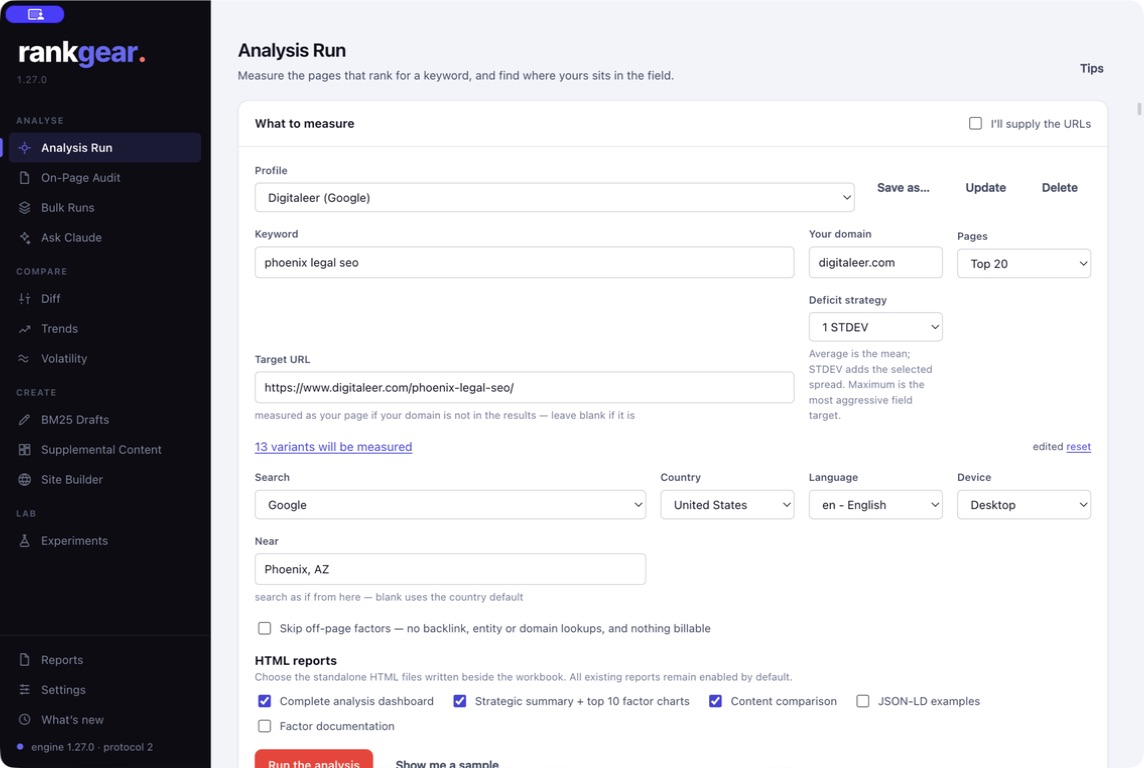
If you are building your SEO workflow from scratch or rethinking your current stack, start with the free data from Google. Use Google Search Console to identify which queries are driving impressions and which pages are underperforming. Use Google Analytics to understand user flow and conversion paths. Then bring in a paid tool for competitive and keyword research. Ahrefs and Semrush both offer strong backlink analysis and keyword research features. For technical audits, Screaming Frog is the standard. For content optimization, Yoast SEO provides practical on-page guidance if you use WordPress, though it should never replace your own editorial judgment.
Finally, read industry voices like Search Engine Land for ongoing education. The landscape shifts constantly. What worked six months ago may already be outdated. The best SEOs I know are the ones who question their tools regularly and are willing to change them when the data tells a different story.
Choosing an seo analysis tool is not a one-time decision. It is a recurring judgment call that depends on your current goals, the size of your site, and the specific problems you are trying to solve. Stay curious, stay skeptical, and never let a dashboard replace the habit of looking at the actual page.